Latest Posts
-
Saḷāyatana: the six-fold dwelling place of sense
Understanding the Buddhist senses, the six-fold dwelling place of sense (saḷāyatana) as they are called in the Pali Canon, is a fundamental step in understanding Buddhist philosophy. Continue reading

-
The American Transcendentalist, Brahma
Most intriguing about Emerson’s Brahma, especially the verses, “I am the doubter and the doubt, I am the hymn the Brahmin sings,” is that it seems to allude to the famous and difficult hymn composed by one of the Ṛgveda’s… Continue reading

-
The American Transcendentalist, Maia
Ralph Waldo Emerson likely became aware of India’s Maya (Illusion) and Advaita Vedanta philosophy after reading Charles Grant’s Poem on the Restoration of Learning in the East (1807). Grant supposed Maya to be a “Goddess sprung from Brahma.” Emerson, who… Continue reading

-
The American Transcendentalist, Indian Superstition
Harvard University knows the value of the “oriental theme.” On March 7, 1821 the faculty assigned Emerson “A Poem. Indian Superstition— 100 lines,” for the Harvard College Exhibition. Emerson’s poem was thought lost, until the 1950s, when a John L… Continue reading
-
Enter the Goddess
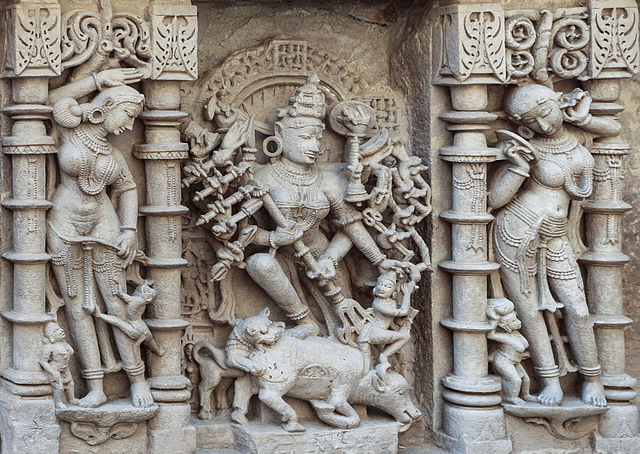
I remember, in the 1980s my friends took an interest in ancient fertility goddesses, witches, and, of course, female madness. There were the films. Sophie’s Choice (1982) and Frances (1982) killed us all. There were the books. The Wide Sargasso… Continue reading
-
Vedāḥ
Vedāḥ (वेद) means knowledge. In ancient India, poets acquired it through mystical experience, as seers and hearers. The Vedāḥ (वेद) is eternal revelation, not of man, that is self-evident (svataḥpramāṇa), perfect, infallible and all-knowing (viśvavid). Continue reading
-
Esoteric Love with Boys
The book Kobo Daishi Ikkan no Sho, written in 1598, claims that Kobo Daishi appeared to a lay worshipper, promised to reveal Shingon’s secret teachings on the love of boys and produced this book. Part One describes ten hand positions… Continue reading
-
Critique of John Horgan’s “Why I Don’t Dig Buddhism”
Maybe there’s a better way to start a conversation than to open with controversy, but since Buddhism draws its vitality from being a counter-culture movement, I’ll pick up on John Horgan’s brooding in Scientific American and take it apart a… Continue reading
 Epistemic Instruments